

Low back pain: the thing that finally gets people in the door
If you're like most people I see, you didn't come in the first time it happened. You stretched, it eased up, life went on. Then it came back. Now it's the thing you think about before lifting your kid, the pause before you get out of the car, the reason you scan every room for the good chair.
Low backs get blamed on age, but I adjust twenty-somethings with angry low backs and seventy-somethings with happy ones. The bigger story is load and movement: hours of sitting, joints that quietly stopped moving well, discs that lose their room to breathe, and muscles guarding so long they forget how to let go.
How we approach it at Radius
Your first visit is a conversation, nervous system scans, and X-rays if you need them, so we know what's actually driving the pain before anyone works on it.
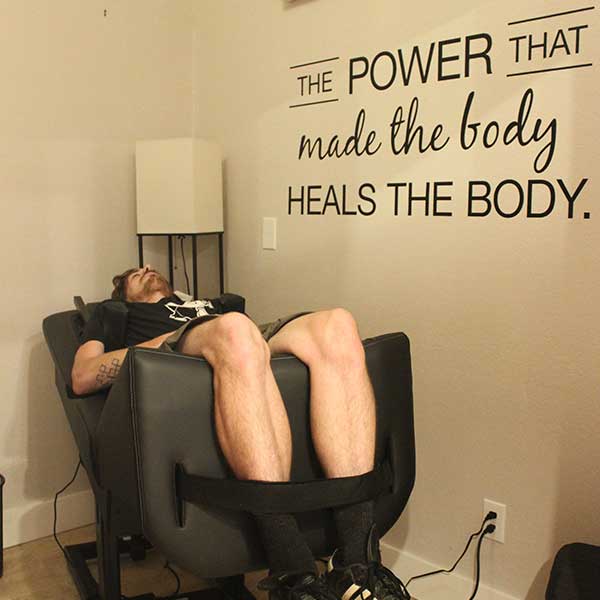
From there, care usually looks like some mix of:
- Gentle, specific adjustments with the Torque Release Technique. We find the joints that quit moving and get them going again, without twisting you into a pretzel.
- Spinal decompression on the Back on Trac. You sit in it like a recliner and it gently stretches the low back, giving compressed discs room to calm down.
- High energy inductive therapy (PEMF) when there's nerve irritation involved. Deep magnetic pulses over the area help angry tissue settle.
Most low backs respond well to that mix. The ones that took years to build take longer, and I'll be straight with you about which kind yours is after I see your scans.
When to get checked
The same warning I put on the sciatica page belongs here: numbness in the groin area or losing control of your bladder or bowels is an emergency room visit, right away.
For the rest: a low back that keeps "going out" is not bad luck, it's a pattern, and patterns can be found and worked on. Book online or call (828) 333-4447.
Should I rest it or keep moving?
Keep moving, gently. Bed rest used to be the standard advice and it turned out to make most backs worse. Short walks and easy movement beat a week on the couch almost every time.
Do I need an MRI first?
Usually not. Your history, an exam, and X-rays tell us most of what we need. If something in that picture says you need advanced imaging or a different kind of doctor, I'll tell you and point you there.
Is it just a pulled muscle?
Sometimes. But a muscle that "pulls" doing something ordinary, like lifting a laundry basket, usually pulled because the joints under it weren't moving well and it was doing extra work. The muscle is the alarm more often than the problem.
More ways we can help.
Chiropractic Care
Precise, gentle adjustments guided by Torque Release analysis.
Pediatric Care
Gentle care for growing nervous systems.
Prenatal Care
Webster-certified care through pregnancy and delivery.
PEMF & HEIT
Deep magnetic stimulation that reaches what hands cannot.
Spinal Decompression
Gentle space for discs and nerves to heal.
Personal Injury Care
Care that helps your body stand down after an accident.

Escape The Matrix